
Can branding become a hot topic in B2B too?
B2B companies don't need branding. If anything, it should be kept to a minimum.
More people than you'd expect don't care much about branding at B2B companies.
Maybe it's because I've never met anyone who said they do brand marketing at a B2B company? Even at B2B marketer meetups, branding is a topic that almost never comes up.
Of course, I agree that it carries less weight than it does in B2C.
For startups, where products and services shift constantly, aiming for minimal branding is something I can nod along to as well.
Even so, since last year, and now that I've joined Indent Corporation (the Korean startup behind the review marketing SaaS VREVIEW), I've carried a desire for branding in my heart and have been letting it out little by little.
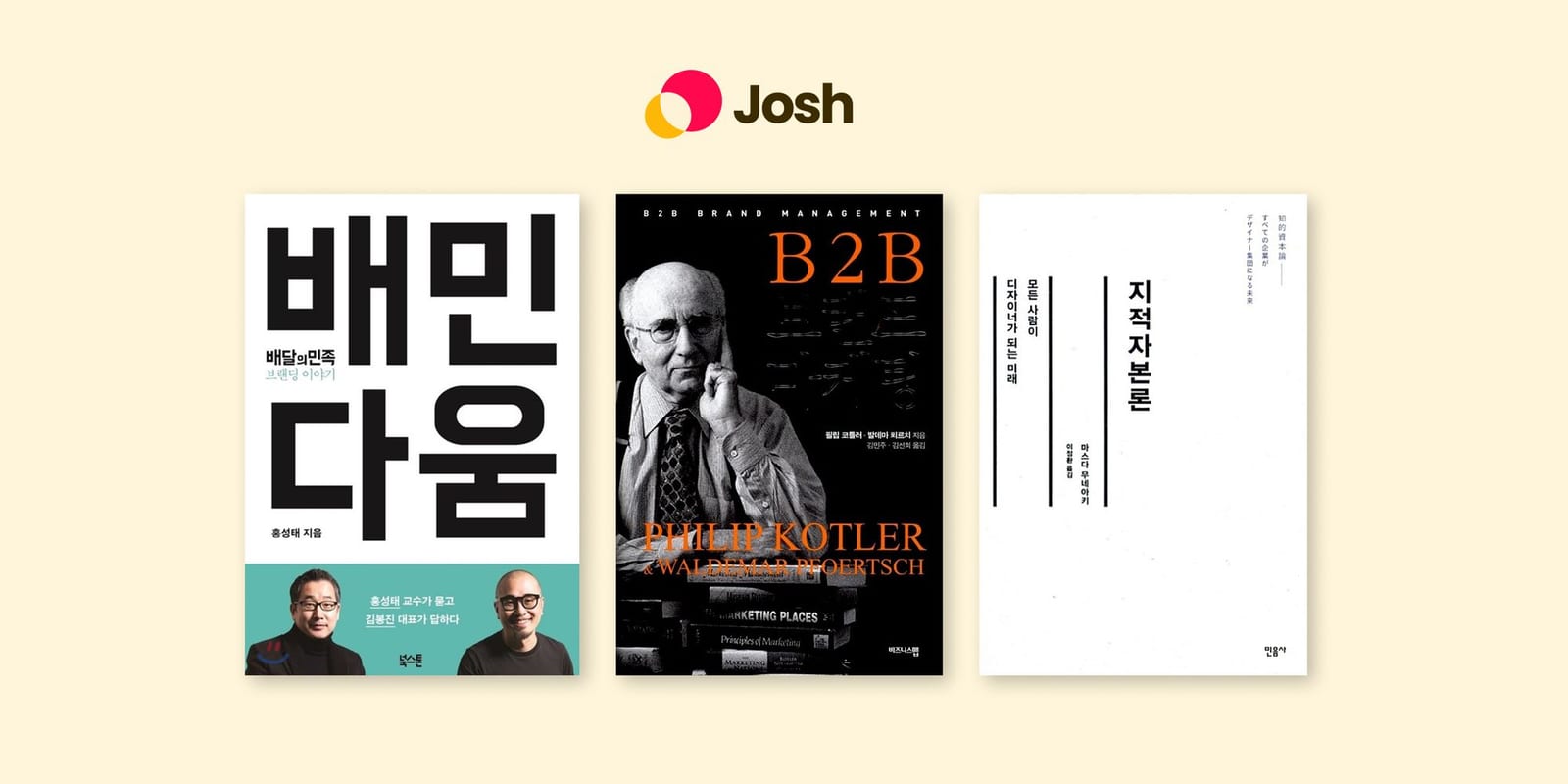
This month I read Philip Kotler's B2B Brand Management, which I'd read last year, along with two books that are something like branding textbooks: Baemin-daum (Korean book; roughly "The Baemin Way") and Intellectual Capital Theory (Chiteki Shihon Ron).
Only Baemin-daum was a first read. I'd already read the other two last year, so for the second pass I flipped through just the parts I wanted to revisit.
B2B Brand Management: branding that saves the customer's time
When I first came across this book at Aladin (a Korean online bookstore) last year, I really liked how cheap it was for its thickness. Thinking about supply and demand, that probably means not many people are looking for it, right?
Still, I started reading it figuring I had nothing to lose, and what do you know, as you'd expect from such a well-known author, it was full of valuable content.
This applies to all three books I read this month, but this one too starts by shattering the illusions around branding.
It lays out, in detail, the right time to start branding, how far branding should extend, and how to use it for company growth.
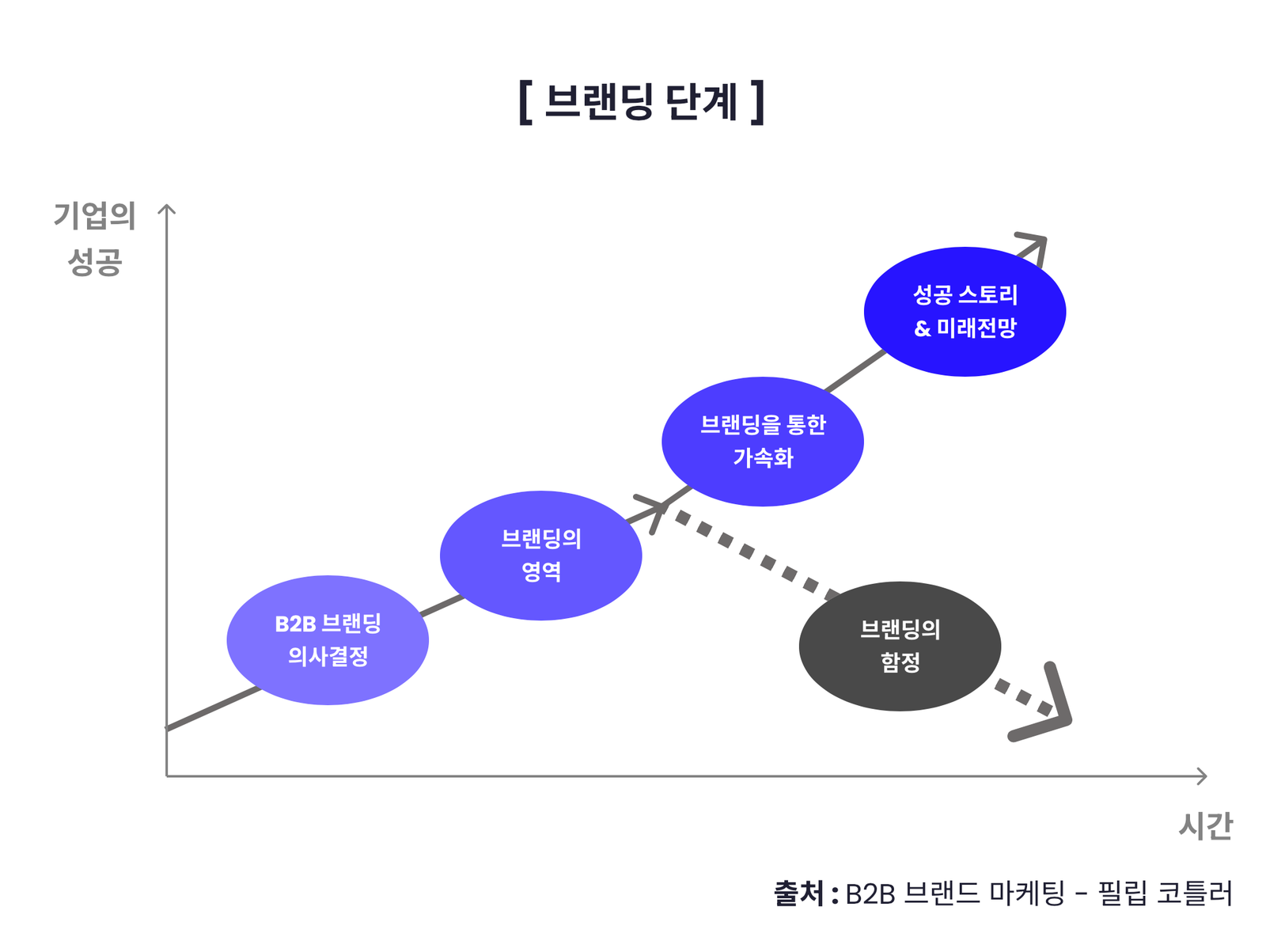
If I had to pick one core idea out of all that material, it's that the branding a B2B company should pursue has to focus on 'saving the customer's time and relieving their anxiety.'
What if a B2B company has no established brand?
We'd be forcing customers in the buying process to go through more trial and error and more information gathering.
And along the way, plenty of customers would drift over to competitors. That's why I think top of mind (TOM) matters even for B2B companies!
Maybe that's why I tend to like descriptive brand names.
Globally, Salesforce, PayPal, LinkedIn come to mind, and in Korea, VREVIEW, Channel Talk, SalesClue, Bunjang (whose Korean name means "lightning market"), and so on? Now that I've written them out, they're all IT services.
What they have in common is you can roughly tell what the brand does just by reading the name. I really like that.
And when you actually Google them and land on their sites, exactly the kind of good content those brands would offer is placed right where it should be.
Logos and design matter too, but a B2B brand is good when this discovery experience itself goes smoothly.
One more thing: the book says B2B companies should align their 'product brand' and 'corporate brand' wherever possible, to lower communication costs.

Baemin-daum: if a brand has a "-ness," it's a good brand!
When it comes to the functional side of a brand I described above, polishing a brand so customers can easily understand and use it, I think Baemin (Baedal Minjok, Korea's largest food delivery app) is a company that left a big mark.
Until I started working in earnest, I assumed Baemin was already a mid-sized or larger company making good money.
They put out so many odd TV ads that made you go "huh?", and you could feel them pouring money into marketing without holding back.
At the time I almost never ordered delivery (I had my regular chicken place's number saved in my phone), so I didn't even know whether I'd ever installed Baemin, but Baemin's ads always stuck in my head.
After reading the book, I realized it must have been a truly huge bet back then.
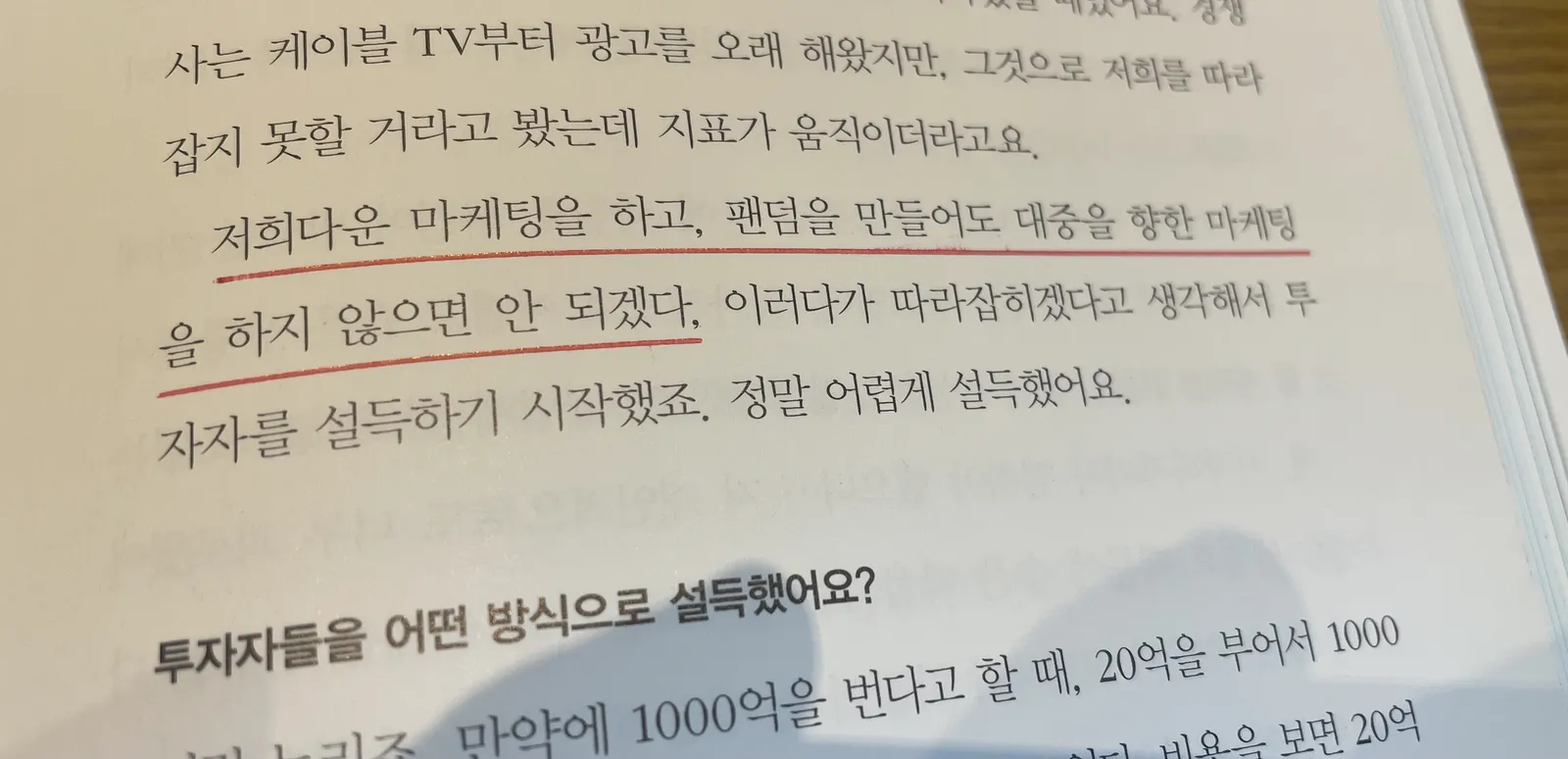
What Baemin went to such lengths to plant in the public's mind was, in the end, the image that "Baemin did a Baemin thing."
Maybe it's just me, but I definitely didn't feel that, or felt much less of it, from brands like Yogiyo or Baedaltong (two rival delivery apps).
*Yogiyo's "peach peach peach peach" jingle definitely stuck in my memory, but it was just baffling. It didn't land.
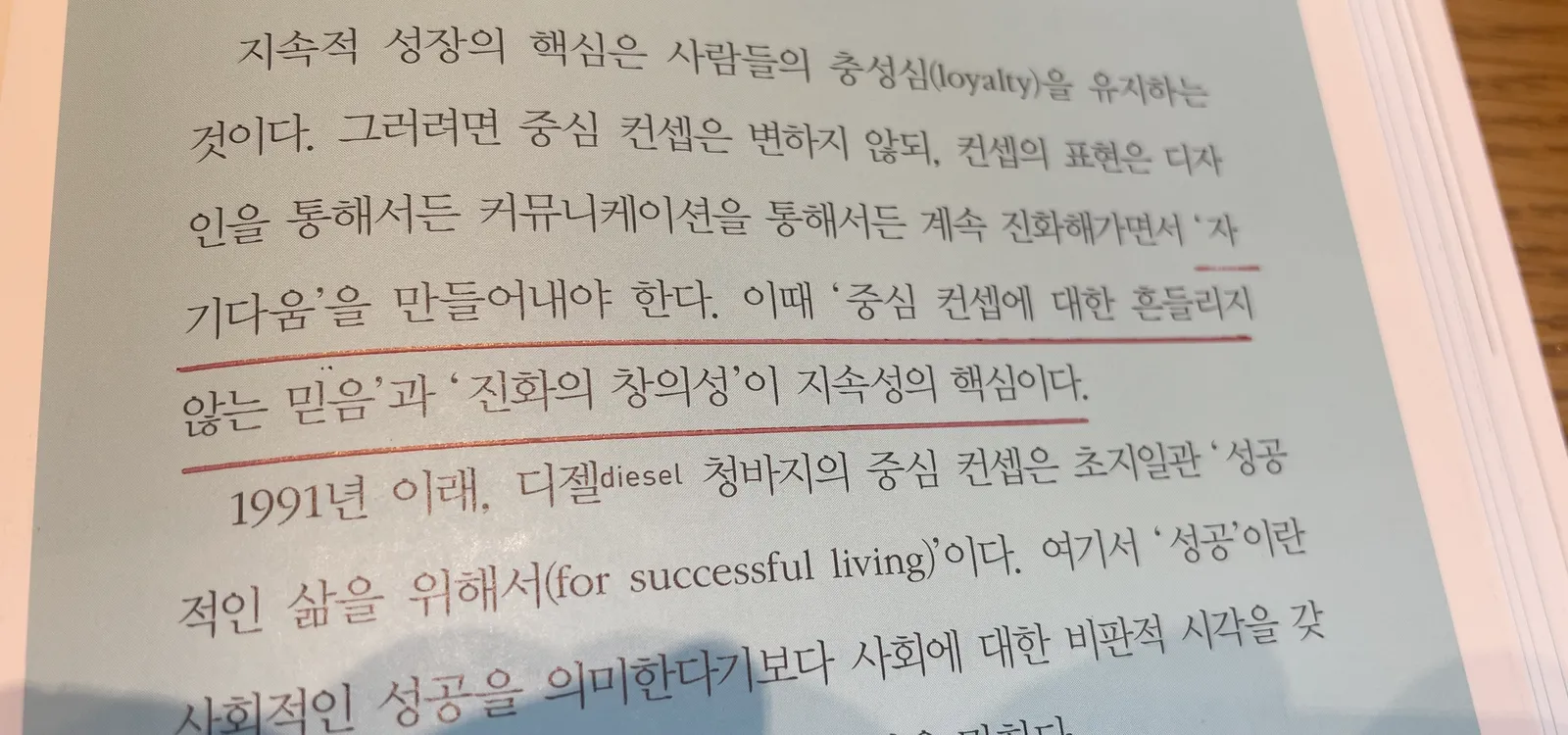
By now, of course, quite some time has passed since founder Kim Bong-jin left Baemin entirely, and it no longer feels like a startup, but Baemin still feels like Baemin, and I like that.
What's the secret to creating that feeling?
Intellectual Capital Theory: planning and design, branding as proposal and persuasion
The book that both Free Workers (Korean book) and Baemin-daum cite when it comes to planning and design, marketing and branding, is Masuda Muneaki's Intellectual Capital Theory.
Tsutaya Books and the Takeo City Library, legendary achievements in spatial planning and branding, are his work.
*I don't even have a passport yet, but this is the one overseas destination I absolutely want to visit.
The result of his meticulous thinking about what meaning an offline space can carry and offer to people in the online era was a success, and it turned the design of most bookstores 180 degrees.

Among Korean bookstores, alongside independent bookshops, Arc N Book seems to be making a similar attempt among the chains. I think this book played a big role in making bookstore browsing fun.
The line that planning and design must always contain a proposal had a big influence on how I think about work afterward.
This month's short conclusion
Isn't the essence of good marketing persuasion, and branding the accumulation of that persuasion and those proposals so that the next person can feel more comfortable and more confident?
And I think this matters in B2B too. If anything, it matters because it's B2B.


